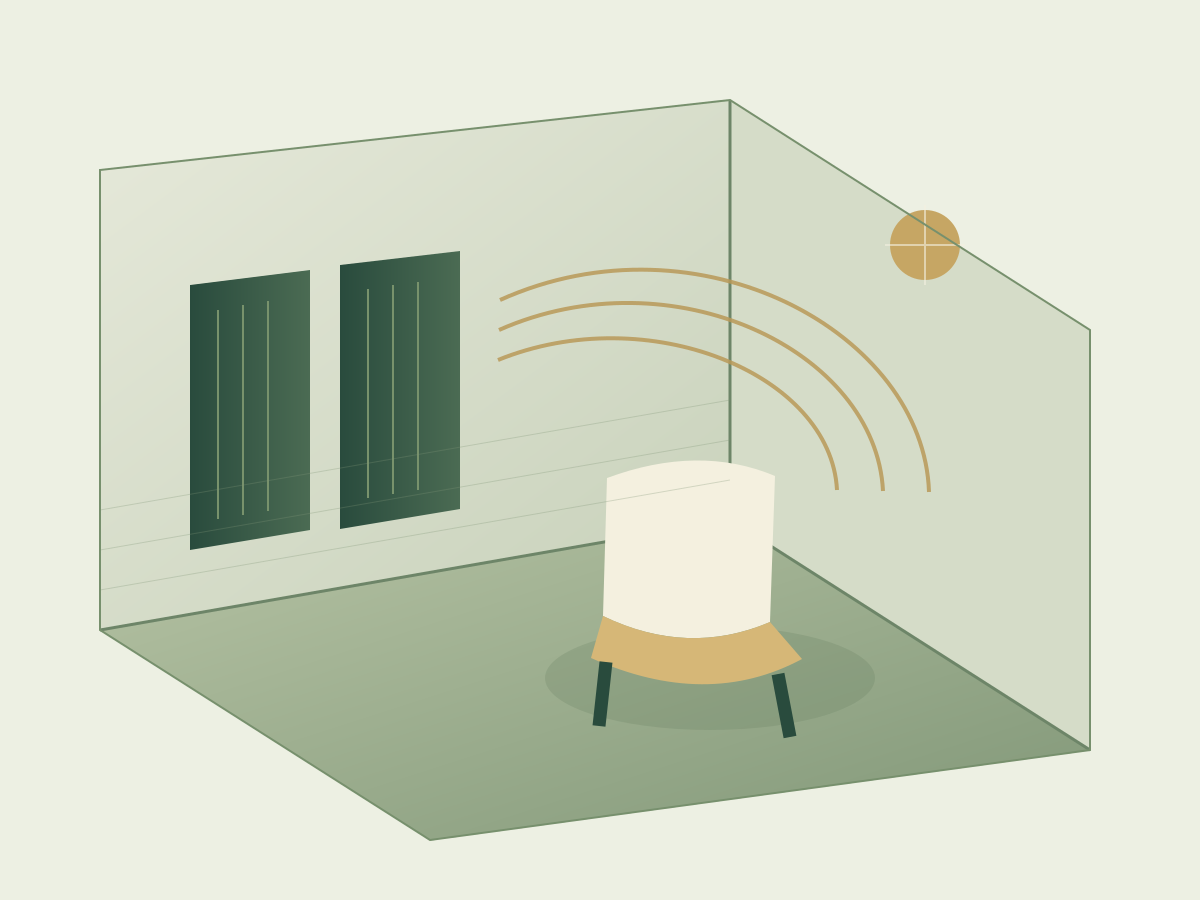
Give the problem a name.
Does conversation feel blurred inside the room? Does music change when you move your seat? Or is the problem sound coming through from somewhere else? Write one sentence about what you notice, where you notice it and when.
These are different starting questions. The aim here is a useful brief, not an acoustic diagnosis or a measurement of hearing, sound exposure or building performance.
Keep the comparison small.
- Choose a familiar reference.
Use the same short spoken passage or familiar recording at a comfortable, unchanged setting. Do not raise the volume to exaggerate a difference.
- Mark one listening place.
Note the chair, speaker position, doors and windows. Keep those details the same while comparing one change.
- Try a reversible move.
If practical, compare a nearby seat or a different speaker position while following the equipment maker’s clearance and stability instructions. Do not cover equipment vents, obstruct exits or attach anything overhead.
- Return to the first arrangement.
Listen again. Write what changed and what did not. A preference is useful even when it is not a calibrated result.
Surfaces are part of the experience.
Sound can reflect from room boundaries and furnishings. Absorbing material and scattering surfaces affect those reflections differently; thin porous treatments do not address every frequency equally. Speaker position also matters. Those are reasons to investigate the room, rather than assume a more expensive speaker will answer the whole problem.
Technical context: Genelec’s room-acoustics guide. It addresses monitoring rooms, not a tailored assessment of your home.
Choose the next useful step.
The reversible change was enough
Keep a note of the arrangement. You do not need a purchase to validate an improvement you prefer.
Sound is coming from another room
Start by separating building sound isolation from internal treatment. A panel shopping list is premature.
Read the distinction >I want to compare room-treatment options
Turn the observation into a short specification before selecting color or pattern.
Build an acoustic-panel brief >I need measured performance
For a studio, shared workplace or a persistent building-noise problem, take the brief to a qualified acoustics professional. This page cannot specify treatment quantities or establish compliance.
Sources, editorial method & limits
Reviewed 2 November 2026. The checklists and selection questions are original editorial aids, not validated tests or a professional specification. The linked manufacturer sources establish their own descriptions; no hands-on product comparison, acoustic survey or conversion-performance evidence was obtained.